

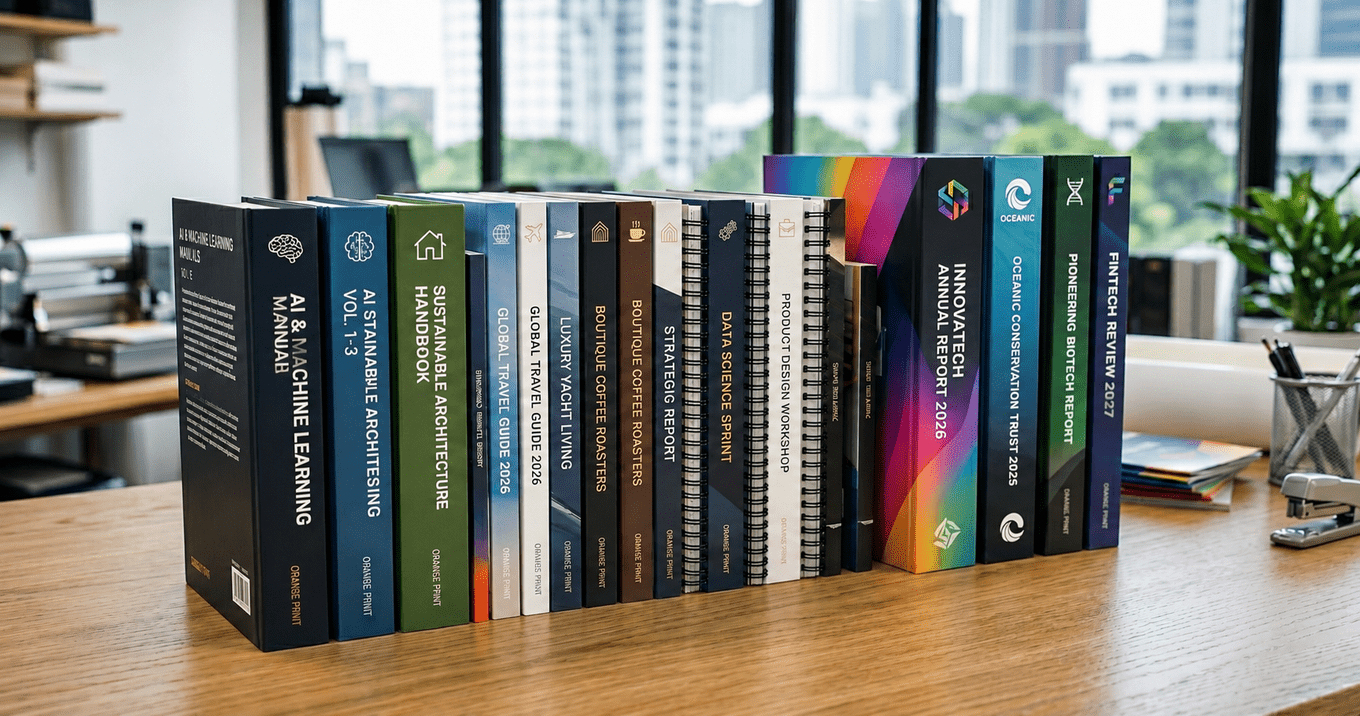
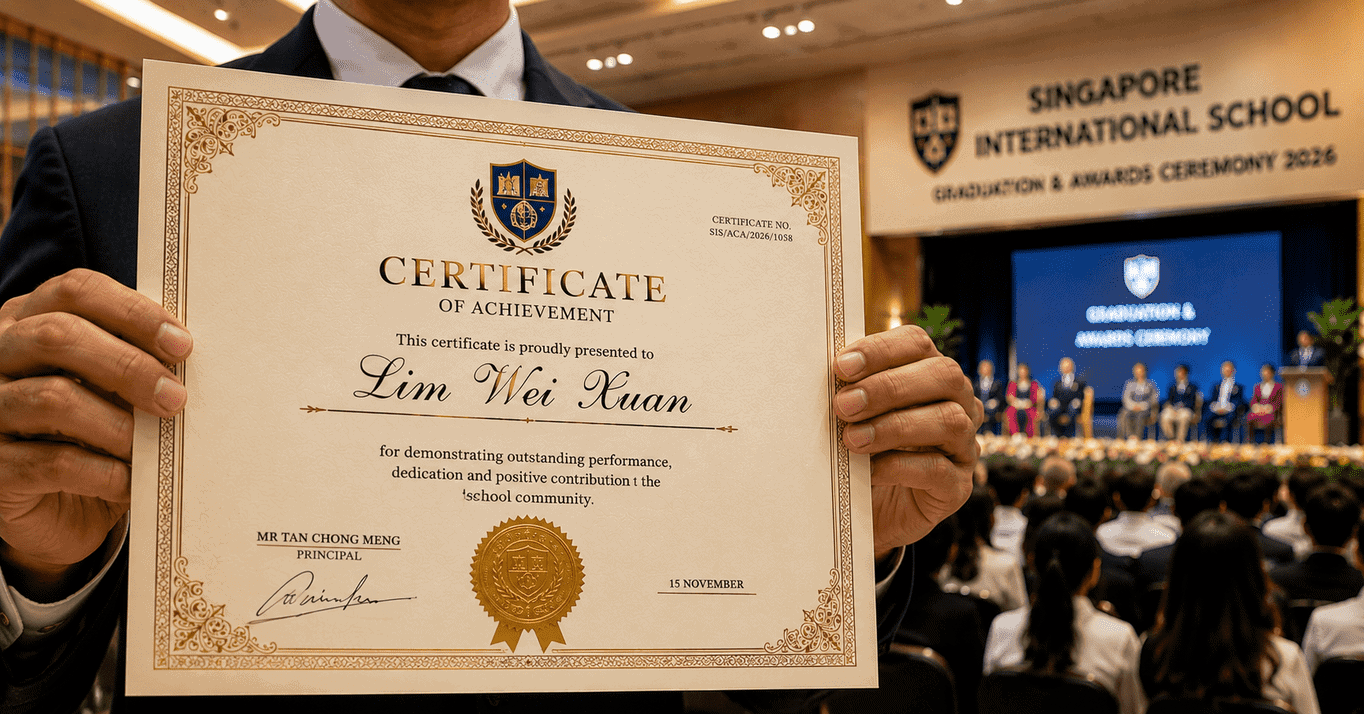
Most people ordering custom booklets in Singapore know roughly what they want, a page count, a rough size, colour printing. Where they get stuck is the binding question, because saddle stitch and perfect bind are both described as booklet binding but produce objects that behave very differently and suit different jobs.
This isn’t a complicated decision once you understand what each method actually does. But making the wrong call, especially on page count, can mean reprinting the whole job. So it’s worth spending five minutes getting clear on it before you send the file.
What saddle stitching actually is
A saddle stitch booklet is stapled through the spine. Two metal staples go through the centre fold of the nested pages, holding everything together. The name comes from the production process where sheets are draped over a saddle-shaped guide before stitching.
Since they’re just folded and stapled instead of glued down a stiff spine, these booklets naturally lay completely flat the moment you open them. It makes a huge difference for training workbooks, exam papers, or event programs, basically anywhere people need to jot down notes or flip pages while their hands are full.
Saddle stitch is also the faster and cheaper of the two methods. Digital printing and saddle stitching together is a very efficient process, which is why turnaround on saddle stitch jobs is usually quicker than on perfect bind jobs.
The page rule that always surprises people is that stapled booklets require multiples of four. Each physical sheet creates four pages once folded down the middle. That means a 20-page document is fine, but a 22-page layout won’t work. You just have to add or drop pages to hit that multiple.
Short-run saddle stitch booklets go up to 44 pages, in standard A4 or A5 sizes or custom sizes on request. The 64-page figure often quoted as a general industry ceiling doesn’t apply to short-run digital production, where the practical cap is lower. Beyond 44 pages, the spine starts to bulge, inner pages creep forward and get cut narrower during trimming, and you’ll want to switch to a perfect bind or spiral instead.
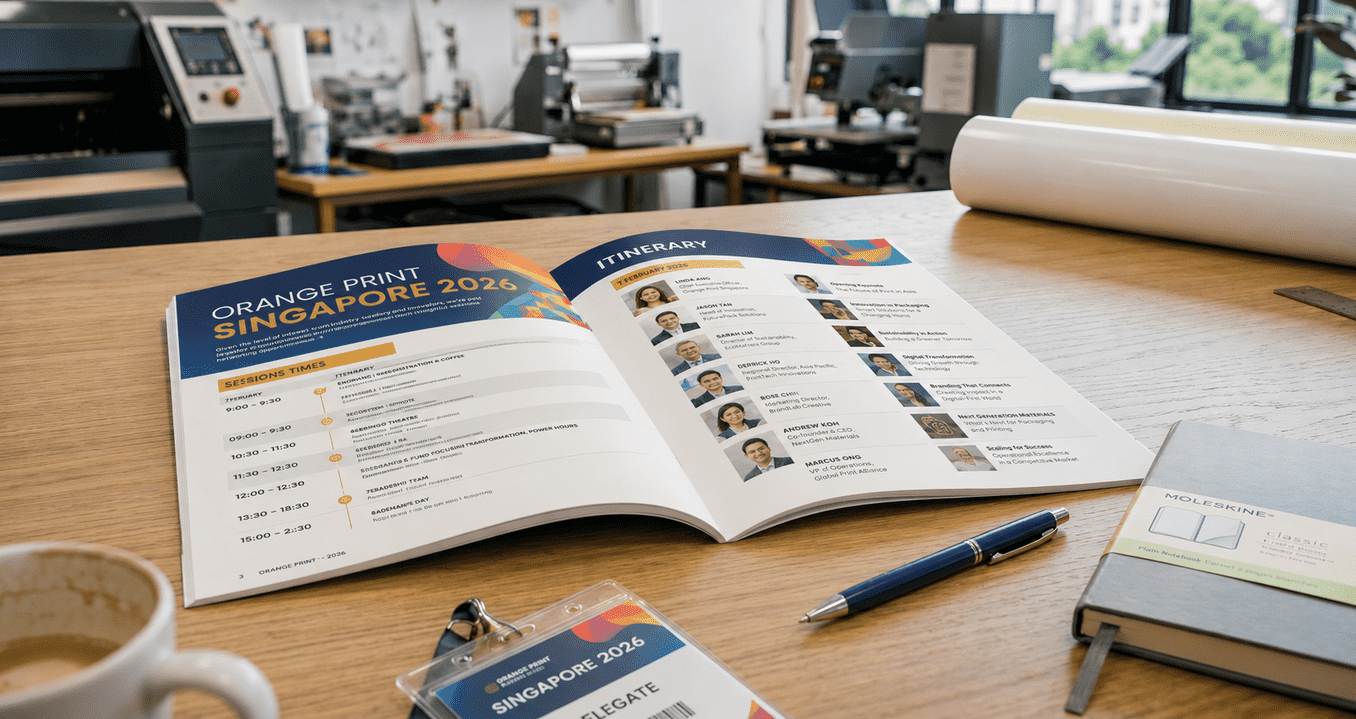
What perfect binding is
Perfect binding is just how standard paperback books are put together. A machine gathers the pages, roughs up the spine edge, applies hot glue, and wraps a clean cover around the whole block. This leaves you with a flat, square edge that is perfect for printing a title, logo, or year.
The object it produces is different in feel from a saddle stitch booklet. It doesn’t lie flat when you open it, the spine resists. It has the weight and presence of something permanent. When you’re producing a company annual report or a substantial product catalogue or a training manual that lives on someone’s desk for months, that permanence is part of the point.
Perfect binding handles thick books easily, but anything under 50 pages is a risk. There is no room to print a title on the spine, and the glue doesn’t hold up under heavy use. For thin booklets that get flipped through constantly, spiral binding is much better.
| Feature | Saddle Stitch | Perfect Bind |
| How it’s bound | Two staples through centre fold | Hot glue applied to roughened spine edge |
| Lies flat when open | Yes, completely | No, spine resists opening |
| Has a printed spine | No, edge is a fold | Yes, flat rectangular spine |
| Minimum pages | 8 | Around 50 recommended |
| Maximum pages | Up to 44 (short-run) | 500 plus |
| Page count rule | Must be divisible by 4 | Multiples of 2 |
| Cost | Lower | Higher |
| Turnaround | Faster | Slightly longer |
| When it fits | Catalogues, programmes, workbooks | Reports, textbooks, corporate profiles |
The page count rule in plain language
For saddle stitch
Your total page count has to be divided by 4. That’s because every sheet creates 4 pages when folded in half. So numbers like 8, 12, 16, 20, and 24 work perfectly, but 22 or 26 will not. This usually catches people who design the content first and count the pages later. If you finish your layout and hit 26 pages, it won’t print. You must either add 2 blank pages to reach 28 or cut it down to 24.
For perfect bind
Just multiples of 2, because every sheet creates 2 pages when bound flat. Nearly any page count works. The constraint is really the minimum thickness, too thin and it won’t hold well.
Which one fits which job
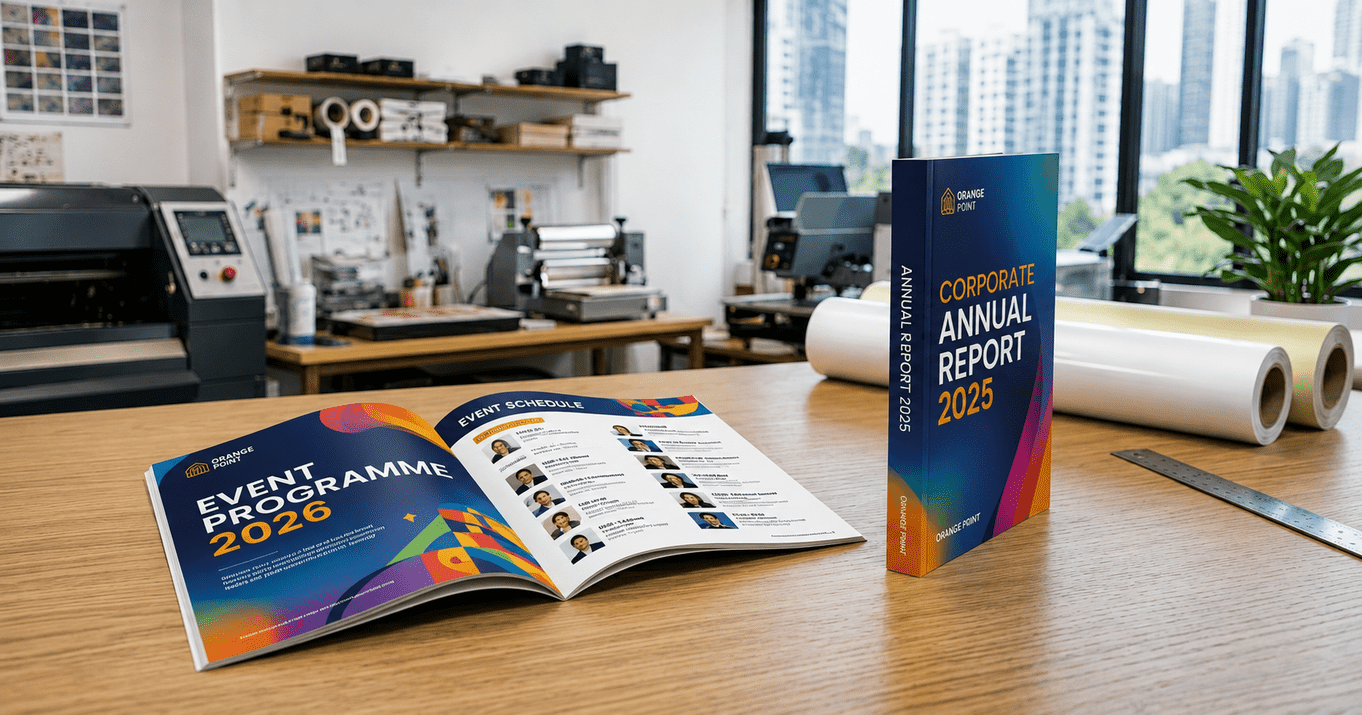
- For an event programme running 16 to 32 pages, saddle stitch is almost always the right call. It’s faster, it’s cheaper, it opens flat in someone’s lap, and the page count suits the format perfectly.
- For a company annual report at 80 pages or more, perfect bind. The spine carries the company name and year, it stands on a bookshelf, and it reads as a proper publication rather than a booklet.
- For a product catalogue that started at 40 pages but now runs to 70, that’s moved out of saddle stitch range. Perfect bind or spiral depending on whether it needs to lie flat.
- For a school assessment booklet at 12 pages, saddle stitch. Standard across Singapore schools, lies flat for writing, inexpensive in volume.
- For a training manual that people will refer to daily for six months, spiral binding is honestly worth considering over either option. It opens fully flat, pages don’t crease at the spine, and it survives heavy repeated use better than glue or staples.
Does the binding affect what the print looks like?
No, they’re separate decisions. Both saddle stitch and perfect bind can produce full-colour interiors and covers. What affects print quality is the paper stock, not the binding method.
Cover stock for perfect bind is typically 250 to 310gsm because it needs to wrap the spine and hold up to being handled repeatedly. Saddle stitch covers are often the same stock as the interior or one weight heavier.
Ordering booklets at Orange Print Singapore
At Orange Print we produce saddle stitch booklets on short-run and handle perfect bind jobs from our Sembawang facility. Short-run saddle stitch booklets cover 1 to 500 copies, so a single proof copy and a 500-piece run are both handled the same way, with same-day options available on request.
The online price calculator covers booklets in standard sizes with an instant quote. For anything with a custom specification, WhatsApp +65 8438 1313 or use the live chat on the site and we’ll give you a quote within the same working day.
Normal turnaround for short-run booklets is 3 to 5 working days from artwork approval, with same-day available on urgent jobs when feasibility is confirmed upfront. As one of the few printing shops in Singapore offering short-run digital for both saddle stitch booklets and color booklets with perfect binding, we’re set up to handle whichever format your project needs without pushing you toward a minimum quantity that doesn’t suit the job.
Booklets are usually just one part of a bigger print job. Event organisers ordering a saddle stitch booklet for a conference often need flyer printing in Singapore for the same event, and corporates printing an annual report often bundle in document printing for board packs too. A printing service that handles both can quote it together. Get in touch with Orange Print today to get started.
Frequently asked questions
1. What is the maximum page count for a saddle stitch booklet?
For short-run digital booklets, the practical cap is 44 pages, in standard A4 or A5 sizes or custom sizes on request. Go past that and the sheets nest tightly, making outer pages narrower after trimming, an issue called creep, and the spine starts to bulge and strain the staples. For anything over 44 pages, perfect binding or spiral are the right alternatives. .
2. My content adds up to 20 pages. Can I saddle stitch it?
No, 20 is not divisible by 4. You’d need to reach 24 by adding content or blank pages, or cut back to 16. A printer will flag this during artwork review. If you need exactly 20 pages of content, spiral or comb binding can handle any page count and might be the better option here.
3. Is perfect binding durable?
Yes, it easily handles everyday office use and corporate presentations. However, if your book will be opened and closed constantly, the cover can start to wear down along the spine. If you want maximum durability for a book that gets heavy daily use, just choose a thicker cover paper and ask us to use flexible PUR glue.
4. What paper should I use for a colour booklet interior?
Most Singapore short-runs use inner paper from 80gsm to 128gsm. For design-heavy or full-color photography pages, go with 120gsm or 128gsm gloss/matte so colors don’t bleed through to the back. If you are just printing text-heavy documents, simple 80gsm paper is much cheaper and works perfectly fine.