


Step into any Singapore café and you’ll probably see a clean logo slapped onto someone’s water bottle or a laptop. You don’t pause to study it, but your brain registers the brand anyway.
That’s the magic of a good sticker. It’s not a brochure you leave behind. It’s not a business card that ends up in a drawer. It sticks, literally and figuratively, and it keeps working long after the original transaction.
Custom sticker printing has quietly exploded in Singapore. E-commerce shops, F&B spots, and local D2C brands use them because they punch way above their weight class financially. Better yet, digital printing lets you run orders from just 50 pieces, so there’s zero risk of wasting money on thousands of units just to test a concept.
This quick guide breaks down materials, formatting, and how to nail your product label printing for retail or e-commerce.
What stickers actually do for a brand
Branding is really just consistent repetition. Every time your logo appears somewhere, in a context that isn’t paid advertising, that’s earned visibility. Stickers create a lot of that.
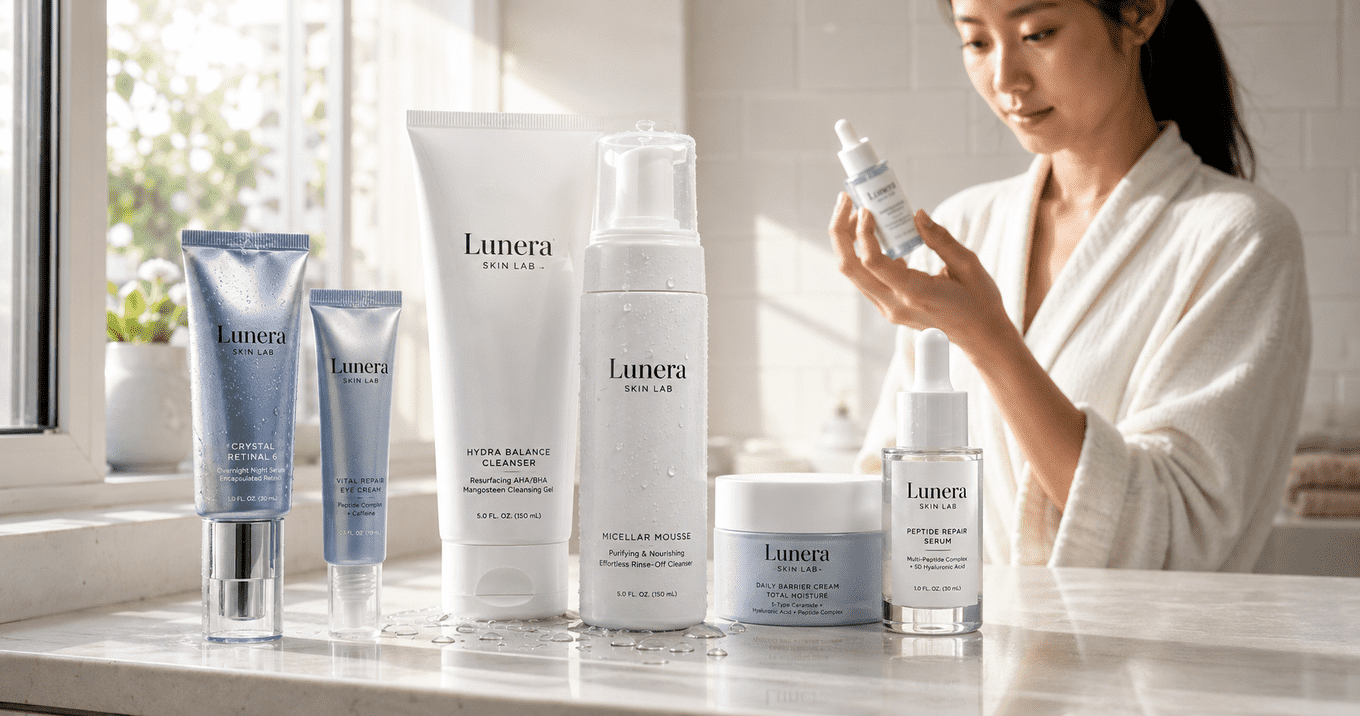
For physical products, the label is your most critical touchpoint. A sharp, professionally printed label on a skincare jar or hot sauce bottle tells buyers you actually care. A cheap, home-printed alternative signals the exact opposite.
Outside of product labels, the other area where stickers do serious work is unboxing. E-commerce brands spend real money on the box experience now because they know customers film unboxings and share them. A branded sticker sealing the tissue paper inside a parcel costs almost nothing per unit but it reads as thoughtful.
What material should your sticker be printed on?
This is the decision most people skip over, and it’s the one that matters most once your stickers are in the real world.
- Mirrorkote, the reliable default. It’s a glossy finish that gives vibrant colours and a smooth surface, suited to product labels and general packaging for indoor use. Unless you have a specific reason to choose something else, this is the everyday default for label sticker printing.
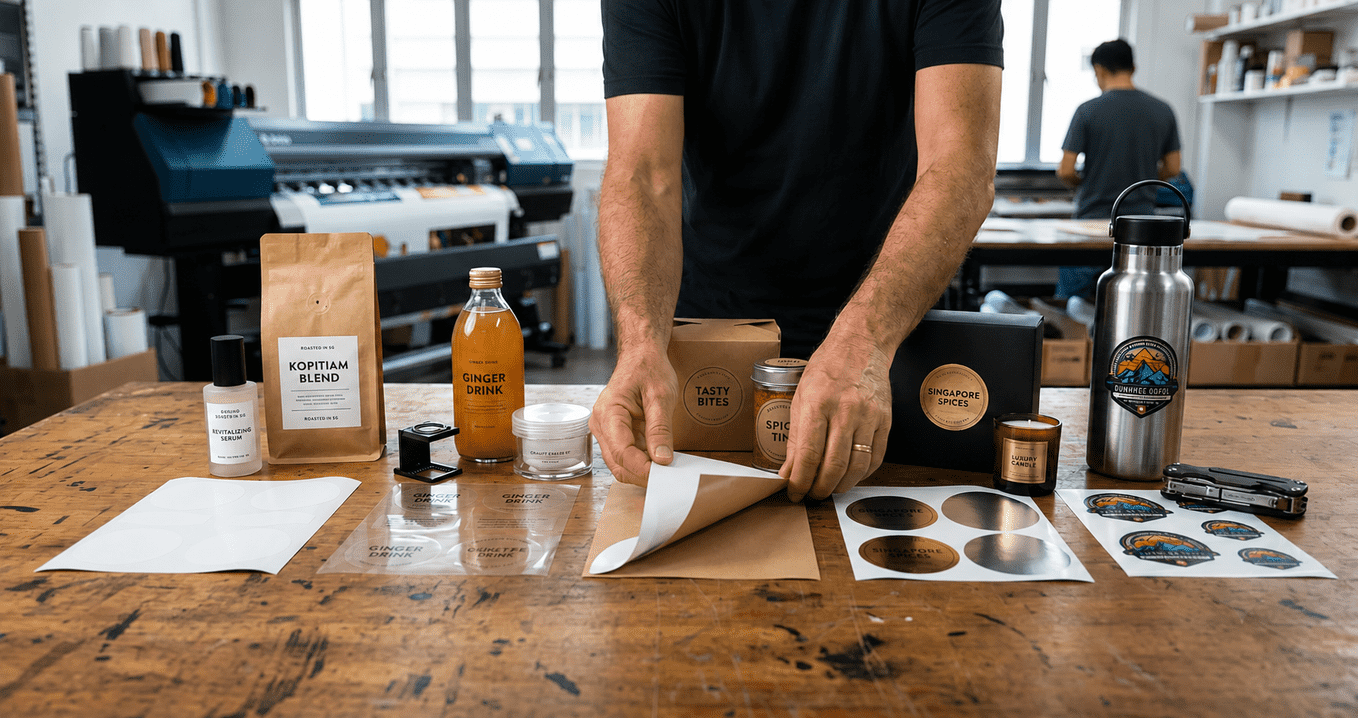
- Clear PP is the move when you want the sticker to look like it’s printed directly onto the surface below it. It has a transparent, “no label” look, suited to glass bottles, jars, and clear packaging. Skincare brands use this a lot, because a clear label with white ink reads as cleaner and more premium than a white-background label.
- Woodfree is the matte, writable option. It’s a clean, non-reflective surface, well suited to address labels, forms, and minimalist designs, worth knowing about if your sticker doubles as something someone might write on after it’s applied.
- Kraft paper stickers are the total opposite of vinyl. The raw, textured brown paper softens the ink, giving off an earthy, handmade vibe. If you’re selling candles, organic food, or craft spirits, this is your material.
- Egg shell sticker paper, which isn’t really a branding sticker in the traditional sense. It’s tamper-evident. It fragments when you try to remove it, so it’s used for warranty seals, security labels, and asset tags.
- Synthetic PP is the way to go if you need something water and tear resistant. It’s suited to food labels, cosmetics, and outdoor use, so it’s the right call for anything that needs to survive handling, moisture, or being outdoors.
Material comparison at a glance:
| Material | Best For | Notes | |
| Mirrorkote (glossy) | Product labels, packaging, indoor use | Vibrant colours, smooth finish | |
| Clear PP | Glass bottles, jars, clear packaging | Transparent, “no label” look | |
| Woodfree (matte) | Address labels, forms, minimalist designs | Writable surface | |
| Kraft paper | Artisan, organic, handmade brand aesthetics | Textured natural finish | |
| Synthetic PP | Food labels, cosmetics, outdoor | Water and tear resistant | |
| Egg shell paper (security) | Tamper-evident seals, asset tags, warranty labels | Fragments on removal |
Die-cut stickers vs. Kiss-Cut Stickers, what’s the actual difference?
Die-cut means the sticker is cut to the shape of your design. If your logo is circular, the sticker is a circle. If your mascot has an irregular outline, the sticker follows that outline. There’s no white background showing because there is no background, the cut follows the artwork. This is what most people picture when they say “sticker” because it looks the most finished and intentional.
Kiss-cut sheet stickers are cut to shape but the individual stickers remain on a full backing sheet. Each sticker can be peeled off individually but the sheet itself stays rectangular. This format is better when you have multiple designs on one sheet, or when you’re producing promotional packs that customers peel themselves, or when your stickers are for internal use and you’re applying them in batches.
For product labels applied during production, whether on a hand-packing line or with a label applicator machine, die-cut labels on a roll are the most practical format. One continuous roll, peels quickly, applies cleanly.
Getting the artwork right before you send it
Most print delays and reprints trace back to artwork issues caught after the job is in the queue. Checking a few technical settings beforehand saves everyone time and avoids frustrating reprint costs.
Resolution
A logo that looks crisp on screen at 72 dpi is going to look noticeably soft in print. Artwork for stickers needs to be at 300 dpi at the actual print size. The cleanest route is vector artwork from Illustrator, because vectors scale without losing quality. If your design was made in Canva or Photoshop, check the export resolution before you send.
Colour mode
Screens use RGB colour, which has a wider gamut than what CMYK print can reproduce. If you design in RGB and convert to CMYK at the printer’s end, certain colours shift. Vivid digital blues go flat. Bright reds edge toward orange. Designing in CMYK from the start eliminates this.
Bleed
Bleed is the strip of your design that extends beyond the cut line, usually 2mm on each side. It exists to cover the slight variance in where the cut actually lands. Without bleed, a fractionally off-centre cut shows a white sliver at the edge of your sticker.
Die-line file for custom shapes
For custom-shaped die-cut stickers, send a die-line file as a separate layer showing exactly where you want the cut to fall. Without it, the printer makes a judgment call on the cut path and it may not match your design intent.
The Realities of Retail Product Label Printing
If your labels are going onto physical products for retail or e-commerce, there are a few things that go beyond standard sticker print.
Waterproofing matters for anything that will get wet in normal use. Skincare, F&B, cleaning products, these all need either a waterproof laminate over the label or a fully synthetic substrate. Standard paper labels degrade quickly when wet.
Curved surfaces need flexible material. A stiff paper label applied to a 60mm diameter jar is going to lift at the edges within days. Polypropylene film is the standard choice for labels on curved packaging because it conforms to the radius without creasing.
Getting the dimensions right is more important than it seems. Measure the flat area on your container accurately, account for any curves or taper, and check that the label you’ve specified doesn’t overlap itself or land in a place that interferes with how the product is opened.
Food safety is worth checking if there’s any chance of adhesive contact with the product itself. Most label adhesives used by commercial printers are food-safe for indirect contact, but confirm with your printer for anything going on food packaging.
Ordering custom stickers at Orange Print
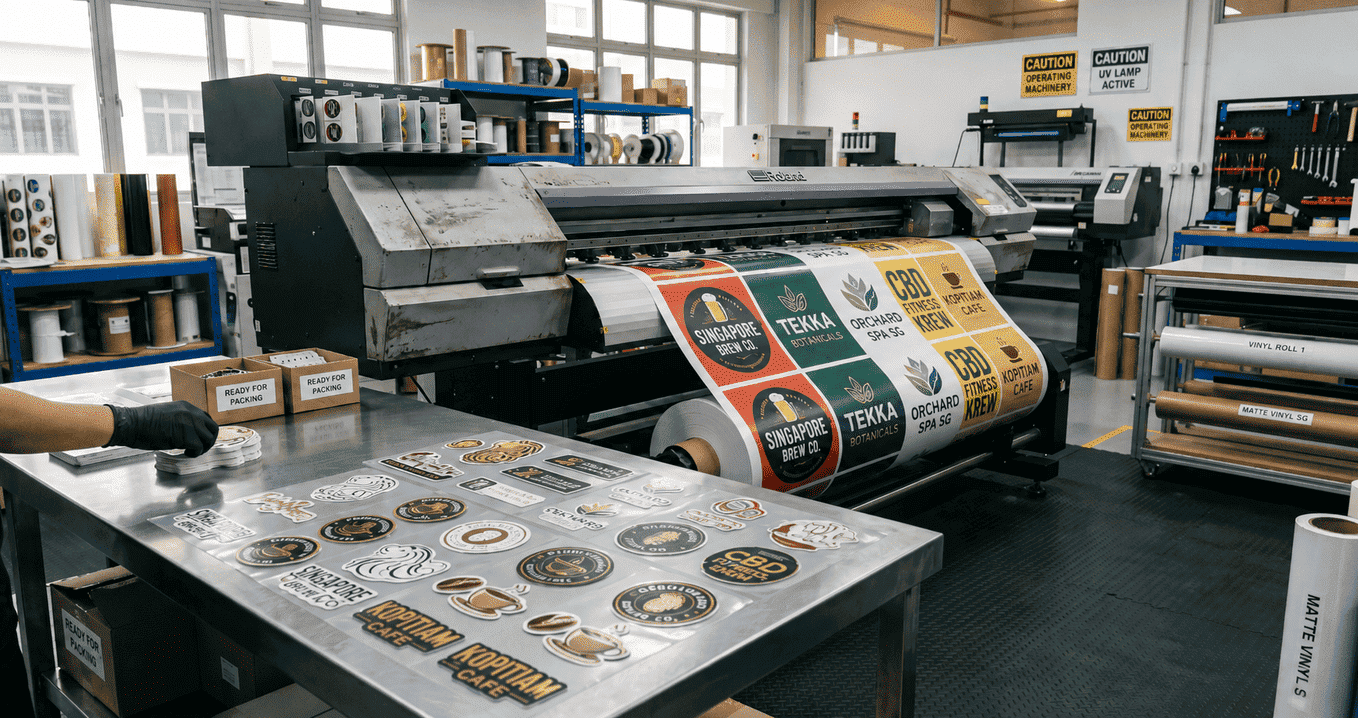
At Orange Print we print custom sticker printing jobs digitally from our Sembawang facility. Full-colour CMYK across white vinyl, clear vinyl, kraft paper, metallic, and egg shell security material, with die-cut, kiss-cut on sheet, and roll formats available.
At Orange Print, most sticker formats have no minimum order quantity, PP labels just need a minimum order value of S$3. Turnaround depends on material:most stickers including kraft and PP stickers confirmed before 11am are often ready same-day or next working day. WhatsApp or use the live chat on the site to confirm.
A lot of customers ordering label stickers and custom sticker printing in the same week also need custom paper bags for retail packaging, or flyer printing in Singapore for an upcoming promotion. If that’s you, mention it when you place your stickers and label printing order and we can quote everything together.
Frequently asked questions
1. What is the difference between custom sticker printing and product label printing?
They are the same product, just different terminology. Label tends to describe stickers applied to physical products for retail sale, while sticker covers promotional, branding and decorative use. The print process is identical.
2. What is the minimum order quantity for custom stickers in Singapore?
There isn’t one for most sticker formats. PP labels work on a minimum order value of S$3 rather than a piece count, and kraft, kiss-cut, and die-cut stickers have no minimum quantity at all, so you’re free to order a small batch to test a design before scaling up.
3. Can I order stickers in custom shapes?
Yes. Round, oval, square, rectangle and fully custom die-cut shapes are all available. For a custom shape, provide a die-line file alongside your artwork, or describe the shape in your order notes and we will create the die-line for you. Get in touch.
4. Are vinyl stickers waterproof?
Standard vinyl is water-resistant but not fully waterproof for extended wet exposure. For label stickers that will be submerged or repeatedly wet, specify a waterproof laminate overlay or a polypropylene substrate. For normal handling and occasional splashes, standard vinyl holds well.
5. How do I make sure the colour matches my brand exactly?
Provide your Pantone reference alongside your CMYK values when you place the order. Our presses are calibrated regularly and we adjust the colour profile to match your reference as closely as possible within CMYK range.