


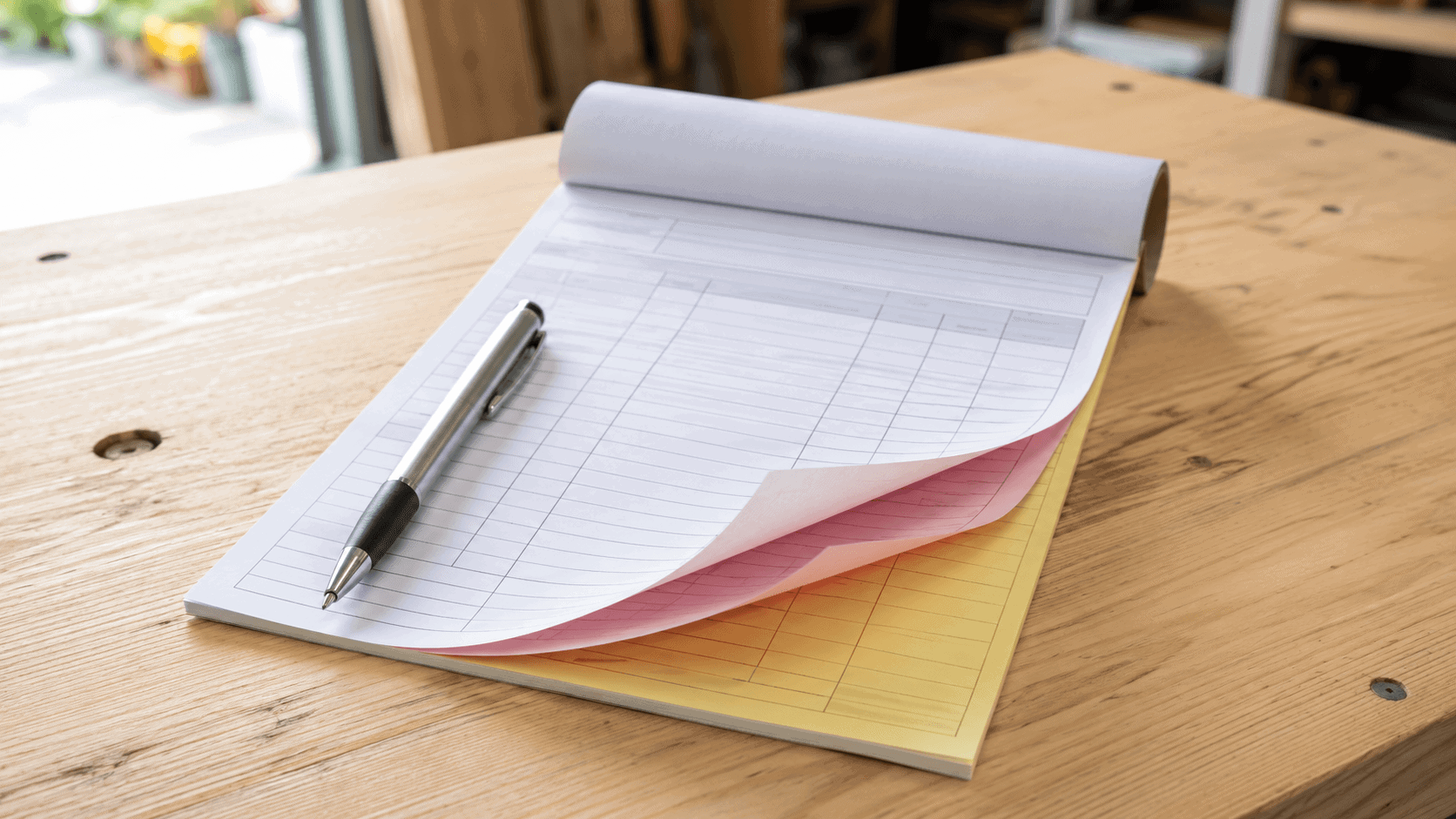

You have probably written in one without knowing its name – the carbonless book where the top copy goes to the customer and a coloured copy stays behind for your file. This guide explains what an NCR bill book is, how the plies work, and the question most Singapore businesses are now asking: with e-invoicing coming in, do you still need one?
Key takeaways
- NCR stands for “No Carbon Required” – the paper copies your writing through to the sheets below, with no carbon paper.
- A bill book holds numbered sets: 2-ply (duplicate), 3-ply (triplicate), or 4 to 6-ply for multi-department use.
- You keep one copy and hand the other to the customer, so both sides hold the same signed record.
- Singapore’s InvoiceNow e-invoicing mandate covers GST invoice data sent to IRAS – it does not replace a signed paper copy on a delivery or cash sale.
- IRAS requires you to keep business records for at least 5 years, in physical or electronic form.
- Most custom bill books are ordered by trade, retail, and service SMEs that issue records on the move.
An NCR bill book is a bound set of carbonless forms that copies whatever you write onto the sheets beneath, with no carbon paper. NCR means “No Carbon Required”. Each set is numbered, so you tear off the top copy for the customer and keep an identical copy on file – used across Singapore for invoices, receipts, and delivery orders.
What is an NCR bill book?
An NCR bill book is a bound pad of carbonless forms that duplicates your handwriting onto the copies below it. You write once on the top sheet, and pen pressure transfers the same text to every ply underneath. Each numbered set gives the customer one copy and keeps a matching one in your book.
In practice it replaces the messy carbon-paper books of the past. The paper itself is coated, so the copy appears cleanly without a loose carbon sheet smudging your hands or your forms. Businesses print them for invoices, receipts, delivery orders, quotations, and job sheets – anywhere a signed, on-the-spot record matters.
What does “NCR” actually mean?
NCR stands for “No Carbon Required”. It describes the carbonless coating on the paper that transfers your writing from the top sheet to the copies below using pen pressure alone. Before NCR paper existed, a separate sheet of carbon paper sat between each layer, which smudged easily and tore. NCR removed that step entirely.
How many plies do you need? 2-ply vs 3-ply vs multi-part
The number of plies is simply the number of copies in each set. Pick it by counting who needs a copy: the customer always takes one, and you keep at least one. Add a ply for every extra party – accounts, the office, a driver, or a warehouse – that needs the same record.
| Plies | Common name | Copies go to | Typical use |
|---|---|---|---|
| 2-ply | Duplicate | Customer + your file | Cash bills, receipts, simple invoices |
| 3-ply | Triplicate | Customer, office, accounts | Delivery orders, job sheets, invoices |
| 4 to 6-ply | Multi-part | A copy per department | Logistics, servicing, warehouse + driver + file |
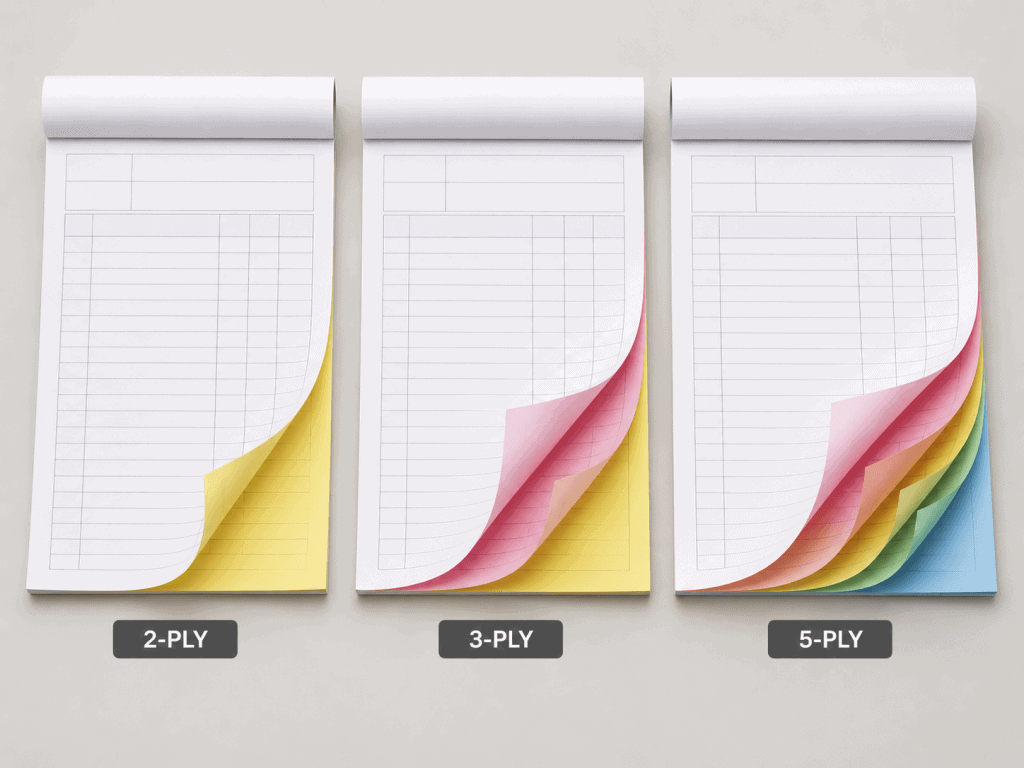
Most Singapore SMEs land on 2-ply for receipts and 3-ply for delivery orders. If you are unsure, count the hands your current paperwork passes through – that number is your ply count.
When does a Singapore business still need a paper bill book?
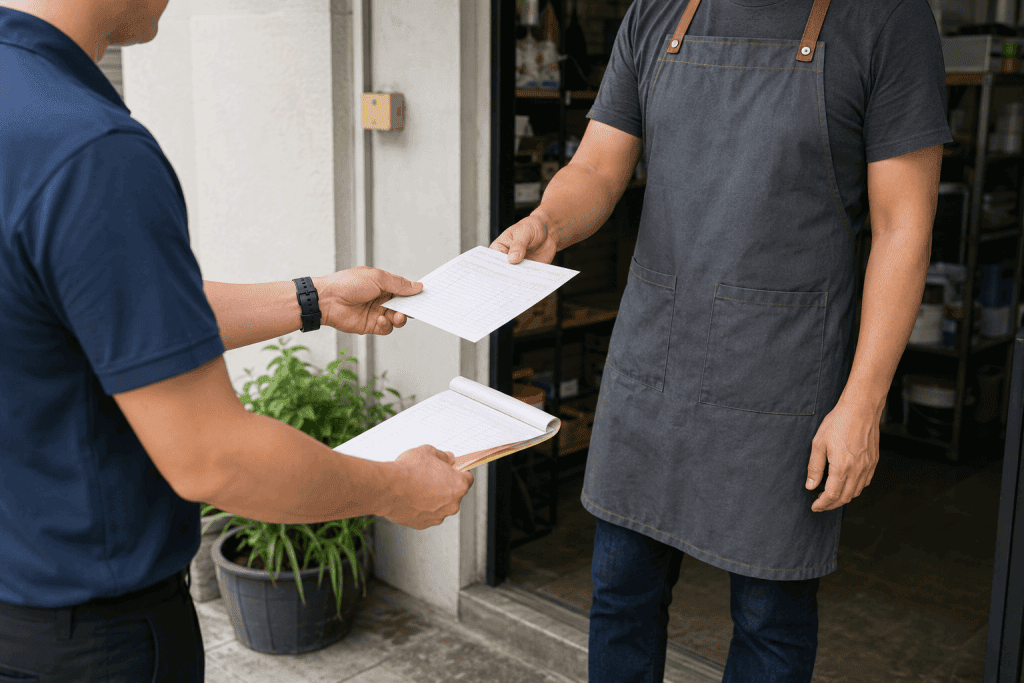
You still need a paper bill book whenever a record has to be created and signed on the spot, away from a screen. Deliveries, cash sales, on-site jobs, and customer sign-offs all need an immediate physical copy. A handwritten, numbered NCR set does this in seconds, with no app, login, or signal.
This is the part that confuses people in 2026. Singapore is rolling out InvoiceNow, the national e-invoicing network run by IMDA on the Peppol standard, and from 1 April 2026 new voluntary GST registrants must transmit their invoice data to IRAS through it. Existing GST-registered businesses follow in phases from 2028.
But InvoiceNow is about how GST invoice data reaches IRAS – structured, digital, business-to-business. It does not put a signed delivery order in your driver’s hand, or give a customer paying cash at the counter a receipt they can hold. Those everyday moments still call for paper. Many businesses run both: e-invoices for GST reporting, and an NCR book for the physical, signed copy on the ground.
Bill books and IRAS record keeping
Keeping your bill book copies matters for tax. IRAS requires businesses to keep proper records of their transactions for at least 5 years from the relevant Year of Assessment, and these can be kept in physical or electronic form. The customer copy of a numbered NCR set is a valid source document for this purpose.
This is why sequential numbering is more than a nicety. A clean, unbroken run of numbers lets you account for every form – none skipped, none duplicated – which is exactly what a tax record should show. Keep your retained copies filed in order and your audit trail is built in.
Bill book, invoice book, receipt book – what is the difference?
The difference is mostly the wording printed on the form, not the paper. A “bill book”, “invoice book”, and “receipt book” are usually the same carbonless NCR product with different field layouts. An invoice book itemises goods and GST; a receipt book confirms payment received; a delivery order book records what was handed over.
Because the underlying product is identical, you choose the layout, not a different paper type. Tell your printer which fields you need – itemised columns, a GST line, signature boxes, your logo – and the same NCR book becomes whichever document your business issues.
What to decide before you print one
Six choices shape your bill book: format (book or pad), binding (top or side), ply count, size, numbering start point, and whether you print in one colour or full colour with your logo. Settle these before you order and your quote and proof come back faster.
If you already have an old book you like, you do not need to redesign anything – a good printer can match the layout and carry your numbering forward from where the last batch ended. At Orange Print we print custom NCR bill books from your own layout or a sample of your existing book, on 50gsm carbonless paper, numbered and perforated as standard, with a typical turnaround of 5 to 7 working days. You can see the full commercial stationery range if you also need letterheads or envelopes to match.
Frequently asked questions
What does NCR mean on a bill book?
NCR stands for “No Carbon Required”. The paper is coated so the pressure of your pen transfers writing from the top sheet to the copies beneath, without a separate carbon sheet. It keeps every copy clean and identical, which is why carbonless NCR books replaced old carbon-paper books for invoices, receipts, and delivery orders.
What is the difference between 2-ply and 3-ply?
2-ply (duplicate) gives two copies per set – one for the customer, one for your file – and suits cash bills and simple receipts. 3-ply (triplicate) gives three copies, usually customer, office, and accounts, and suits delivery orders and job sheets. Choose your ply count by how many parties need the same record.
Is a bill book the same as an invoice book?
Mostly yes. A bill book, invoice book, and receipt book are usually the same carbonless NCR product with different printed fields. An invoice book itemises goods and GST, a receipt book confirms payment, and a delivery order book records goods handed over. You pick the layout, not a different paper.
Do I still need a paper bill book with e-invoicing coming in?
Often yes. Singapore’s InvoiceNow mandate covers how GST invoice data is sent to IRAS digitally. It does not replace a signed paper copy handed over at a delivery, a cash sale, or an on-site job with no connectivity. Many businesses keep an NCR book for those moments and use e-invoicing for GST reporting.
How long must I keep my bill book copies in Singapore?
IRAS requires businesses to keep records of their transactions for at least 5 years from the relevant Year of Assessment, in physical or electronic form. The retained customer copy of a numbered NCR set is a valid source document, so file your copies in number order and keep them for the full period.
Can I get a bill book printed with my own logo and fields?
Yes. Bill books are printed fully custom – your logo, company and UEN details, itemised columns, GST line, terms, and signature boxes. Send a print-ready PDF, or hand over your old book and a printer can rebuild the layout. Approve a digital proof before printing so the fields and numbering are right.
Ready to print your NCR bill book?
An NCR bill book is still one of the simplest, most reliable records a Singapore business can issue – signed, numbered, and in the customer’s hand on the spot, e-invoicing or not. The trick is matching the plies, size, and layout to how your forms actually move.
Print your custom NCR bill book with Orange Print – duplicate, triplicate, or multi-part, numbered and perforated as standard. Send your spec or your old book on WhatsApp for a fast quote, or use the chat box at the bottom right of any page.