


Stickers and labels may look like minor add-ons, but they have a major impact on how customers perceive your product and your brand. They can instantly upgrade plain packaging, keep your branding consistent, and make your items look more polished in photos, on shelves, and in unboxing videos. Labels also do the serious work of sharing essential information like ingredients, expiry dates, instructions, and barcodes, helping you stay clear and compliant. And, when you need to run a quick campaign, stickers are an easy way to add QR codes, promos, limited-edition badges, or tamper seals without changing your main packaging.
Today, many businesses turn to custom sticker and label printing in Singapore to improve presentation and customer experience without blowing the budget. However, choosing the right option gets easier once you understand what you’re actually ordering. Stickers are usually used for branding and promotions, while labels are typically used for product identification and information. Let’s start by breaking down the difference between stickers and labels.
Stickers Vs Labels: A Quick Comparison Guide
Main purpose
- Sticker: branding, decoration, promos, fun add-ons.
- Label: product identification and essential information.
- Sticker: branding, decoration, promos, fun add-ons.
What goes on it
- Sticker: logo, tagline, QR code, “thank you”, discount badge, social handle.
- Label: product name, variant, ingredients, expiry date, directions, barcode, warnings, batch/lot details.
- Sticker: logo, tagline, QR code, “thank you”, discount badge, social handle.
Where it’s used
- Sticker: sealing tissue paper, closing mailers, goodie bags, freebies, event packs.
- Label: on bottles, jars, pouches, boxes where customers expect to read product info clearly.
- Sticker: sealing tissue paper, closing mailers, goodie bags, freebies, event packs.
Design focus
- Sticker: visual impact first (shape, colours, finish, cut).
- Label: readability first (font size, spacing, hierarchy of information).
- Sticker: visual impact first (shape, colours, finish, cut).
Cost drivers
- Sticker: cost often changes with shape (die-cut), size, and special finishes.
- Label: cost often changes with material durability, print clarity, and the amount of content/space needed.
- Sticker: cost often changes with shape (die-cut), size, and special finishes.
Custom Sticker & Label Printing 101:
1. Start with your goal (it decides everything else)
- If the priority is branding or promotions, you’ll usually lean toward stickers (logo seals, QR stickers, campaign badges).
- If the priority is product information, you’ll usually need labels (ingredients, expiry dates, instructions, barcodes).
This first decision affects size, material, finish, and even whether you should print in sheets or rolls.
2. Choose the right format: cut sheets vs rolls
- Cut sheet stickers/labels: easier to store, count, and apply by hand, especially if you have many designs or SKUs.
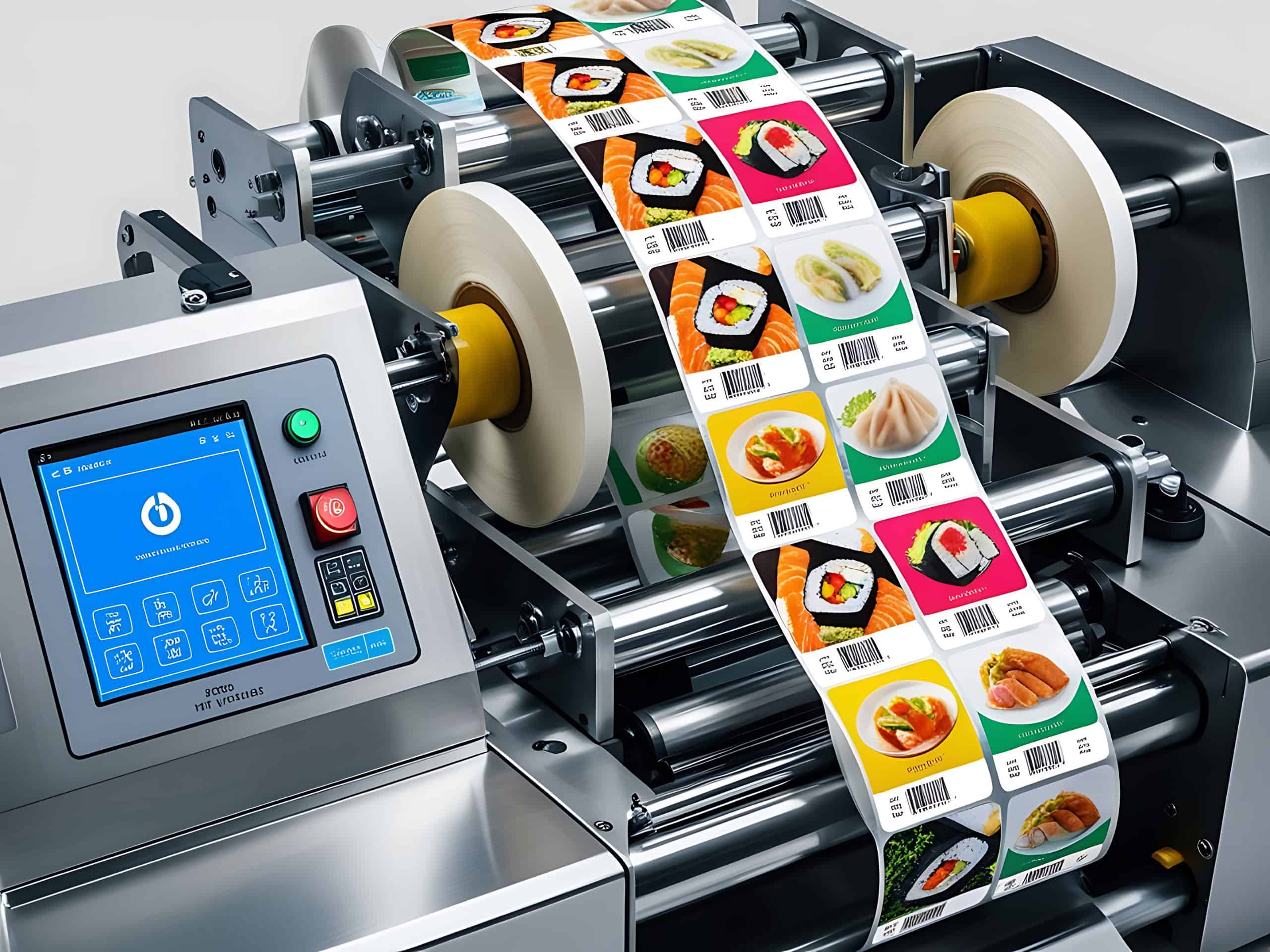
- Roll labels: faster for higher volume, smoother application with a dispenser, and more consistent placement on packaging.
- If you’re scaling up production, rolls usually save time even if the per-unit cost looks similar.
3. Pick a material based on how the item will be handled
- For dry, indoor use, paper can be cost-effective and looks great.
- For items exposed to moisture, oil, friction, or refrigeration (common in F&B), consider more durable synthetic options.
- Ask yourself: Will this go into a fridge? Will customers handle it with wet hands? Will it rub against other items in a box?
4. Match the adhesive to the surface (this is where many people get it wrong)
- Smooth surfaces (plastic bottles, glass jars) usually work well with standard adhesives.
- Textured surfaces (kraft paper, fabric pouches) can cause lifting at the edges if the adhesive isn’t suitable.
- Curved containers need extra care: a label that’s too large can wrinkle or peel over time.
5. Decide on shape and cut style.
- Standard shapes (circle, rectangle, oval) are cost-friendly and quick to apply.
- Custom die-cut shapes help you stand out and feel more premium, especially for branding stickers.
- If you’re using stickers as seals, choose a shape that closes cleanly without creasing.
6. Select a finish that fits your brand and use case.
- Gloss: vibrant, eye-catching, good for colourful branding and retail presence.
- Matte: clean, premium feel, great for minimalist brands and product photography.
- Protective finishes can help prevent scuffs and fading, especially for items that get handled a lot.
7. Get sizing right before you design.
- Measure the actual container or packaging area (not what you “think” will fit).
- Leave comfortable margins so text doesn’t sit too close to the edges.
- If you’re including a QR code, keep it large enough to scan quickly under normal lighting.
8. Design for print, not just for screen
- Keep text readable: small fonts that look fine on a laptop often print smaller than expected.
- Prioritise hierarchy: product name first, key info second, fine print last.
- Use high-resolution assets and export properly to avoid blurry logos and jagged edges.
9. Plan for compliance and customer clarity.
- If you sell consumables, skincare, or anything that needs instructions/warnings, labels are not optional.
- This is where product label printing becomes more than branding; it’s about reducing confusion, building trust, and meeting basic expectations from customers and retailers.
10. Know what affects cost (so you can budget smarter).
- Biggest cost drivers: size, quantity, material type, shape complexity, and special finishes.
- Ways to save: standardise sizes across products, print in batches, simplify cut shapes, keep finishes consistent across a range.
11. Think about speed and reorders
- If you’re launching a new product, don’t just plan for the first print run.
- Keep editable files, save specs (size, material, finish), and track what worked so reordering is fast.
For a smoother ordering experience, Orange Print lets you pick your format, material, finish, and quantity, all in one place. We offer a wide range of sticker and label options, so you can choose what works best for your packaging.
Conclusion:
In the end, the right stickers and labels are the ones that match your product, your packaging, and how customers handle your items day to day. Just choose the right format, material, finish, and size upfront, and you’ll save on reprints while maintaining a consistent look across all your runs.
When you’re ready to print, Orange Print makes it simple to customise your stickers and labels, with options for both small runs and growing volumes. Get in touch with us for stickers and labels that look good, stick well, and stay consistent on every reorder.